PLENARY SPEECH 1
Talk title: Solid waste management practices in Australia: case studies
Transnational waste recycling is widespread and carries environmental and economic consequences for exporting and importing nations. Existing research concentrates on management in importing countries, with limited attention to exporting contexts. Using Australian waste export data and geospatial analysis, transnational recycling is examined from the exporter perspective. Findings show no significant association between environmental indicators and export destinations. Data gaps obscure the fate of exported waste, constraining informed decision-making. Greater bilateral data sharing and tracking are recommended to clarify impacts and improve accountability. Many countries rely on policy interventions to improve solid waste recycling rates, yet evaluating their effectiveness remains challenging due to complex social contexts and demanding data requirements. Repeated measures analysis of variance is adopted to assess Australia’s solid waste policies, offering a novel approach that accommodates different policy start times. Results show that regions implementing combined policy measures achieve stronger improvements in recycling rates, whereas regions without policy intervention exhibit a consistent decline in recycling performance over time.
Using historical data to assess illegal dumping risk can improve waste management in low-density areas with limited enforcement capacity. Geospatial analysis and machine learning are employed to enhance risk classification accuracy. By integrating dumping locations with road characteristics, high-risk areas are refined to specific road segments rather than broad zones.
Speaker:
Dr. Jian Zuo is a Professor in Sustainable Construction at the School of Civil Engineering and Construction Management, Adelaide University. His main research interests are related to health and sustainable built environment via both technical (e.g. smart technologies) and managerial (e.g. policy intervention and behavioural change) means. In particular, he has undertaken extensive research on health and safety issues in the construction industry at both micro and macro levels. These include general dust, silica dust and Particulate Matter emissions derived from construction activities; and air pollution issues derived from manufacturing of construction materials. As the lead researcher, he has been part of team to deliver significant outcomes in a series of competitive grants in Australia such as Industrial Transformation Training Centre, Discovery Projects and Linkage Projects funded by the Australian Research Council as well as many other national key projects (e.g. Natural Hazards Research Australia, NCCARF Climate Change Adaptation Research Grants, Australian Housing and Urban Research Institute). He has long been engaged in the study of ecological towns, green buildings and sustainable development of the construction industry. He has published more than 100 papers in top journals, including more than 80 journal papers indexed by SCI and SSCI, Google Scholar indexed more than 37,000, and the H-index is 102. Twelve papers are listed as hot papers/highly cited papers by Incites Essential Science Indicators (ESI).
PLENARY SPEECH 2
Talk title: Smart agricultural robots transforming the current and future of farming
Nowadays, the integration of robotics and smart technology in agriculture marks a significant evolution in farming techniques, promising enhanced efficiency and sustainability. The latest advancements and applications of smart agricultural technology are being explored by scientists all over the world. In this presentation, we begin with the controlled environment plant production system for orchid care and cultivation within greenhouses. This system leverages environmental control to optimize growth conditions, enhancing both the yield and quality of orchid plants. Subsequently, the deployment methodology of autonomous agricultural robots in greenhouses is explored. These robots are designed to perform a variety of tasks, from planting and monitoring to harvesting, reducing labor costs and increasing productivity. The presentation also covers the development and use of exoskeletons for agricultural tasks. These wearable devices augment human capabilities, reducing physical strain and improving efficiency in labor-intensive activities. Lastly, we discuss the innovative transplanting attachment for white-water snowflake seeding. This attachment automates the process of transplanting these aquatic plants, ensuring higher survival rates and more uniform planting. These technologies contributed to improving crop productivity while reducing farmers' labor. They represent the forefront of agricultural innovation, laying a robust foundation for developing agriculture and offering transformative solutions to overcome farming challenges in the future.
Speaker:
 |
|
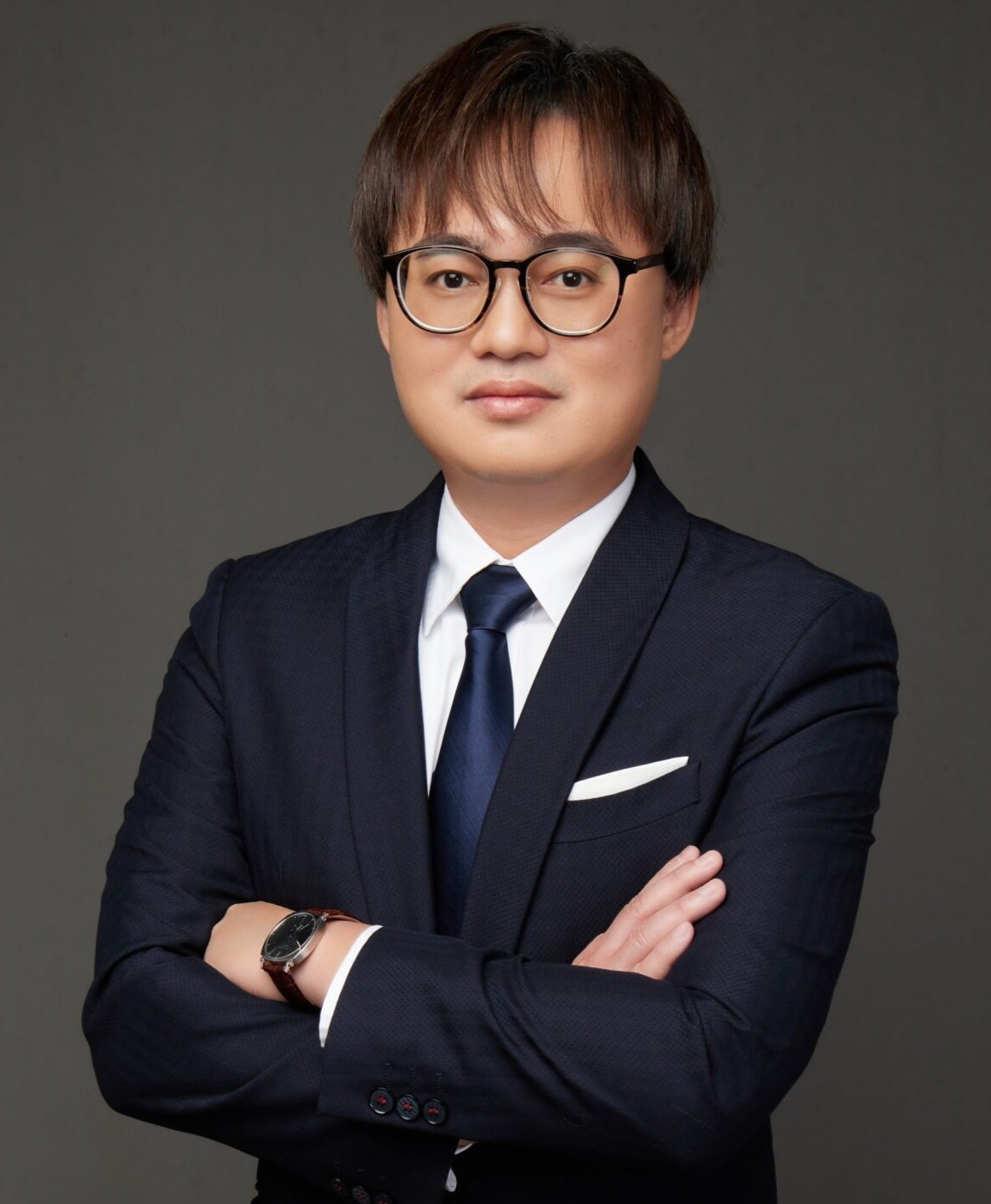
Professor Wei-Chih LIN
Director & Educational Counsellor,
Education Division, Taipei Economic & Cultural Office in Ho Chi Minh City, Vietnam
Distinguished Professor,
Department of Mechanical and Electromechanical Engineering,
National Sun Yat-sen University, Taiwan
Email: wc.lin@mail.nsysu.edu.tw
|
Dr. Wei-Chih Lin is a distinguished professor in the Department of Mechanical and Electromechanical Engineering at National Sun Yat-sen University. With a Ph.D. in Engineering from the University of Cambridge, Dr. Lin has over 15 years of experience in mechanical engineering, specializing in advanced microelectronic devices and MEMS (Micro-ElectroMechanical Systems). His career includes roles at the Industrial Technology Research Institute (ITRI) in Taiwan, as well as positions at Tohoku University and the National Institute for Materials Science (NIMS) in Japan.
His research interests include mechatronics design, human-machine systems, assistive devices, and bioengineering, with a focus on bio-inspired technologies that address social challenges. In agriculture, he has developed smart machinery, including robotic exoskeletons and automated guided vehicles, which enhance farmers' strength and reduce fatigue. In bioengineering, his work includes creating smart wound healing dressings with innovative materials to accelerate the healing process. Dr. Lin has made significant contributions to both agriculture and biomedicine, holding over 30 patents and publishing more than 60 academic articles throughout his career.